

Dental Coding Explained: Why Accurate CDT Codes Matter for Insurance Reimbursement
Updated 12/26/25
Patients often take for granted the seamless process of visiting a dental office, receiving treatment, and then having their insurance handle the payments. Little do they know that behind this seemingly simple process lies a complex system known as dental coding, which plays a vital role in legitimate insurance reimbursement. Dental coding is an essential aspect of the dental billing process, ensuring that services are accurately reported, billed, and reimbursed. In this blog post, we will delve into the significance of dental coding and its impact on insurance collections.
Understanding Dental Coding
Dental coding is the standardized method used by dental professionals to describe the services provided during a patient’s visit. Just like medical coding, dental coding employs a series of alphanumeric codes to identify specific procedures and treatments.
Current Dental Terminology (CDT) provides a consistent method of documenting and reporting dental procedures. The American Dental Association (ADA) Council on Dental Benefit Programs’ (CDBP) Code Maintenance Committee (CMC) is responsible for maintaining the CDT code set. The CDT Code encompasses a vast array of dental procedures, ranging from routine check-ups and cleanings to more complex treatments such as root canal therapy and dental implants

The Role of Dental Coding When Submitting Dental Claims
Let’s take a look at the dental practice revenue cycle pipeline. While dental coding plays a crucial role in submitting clean dental claims, it also plays a central role in the dental practice revenue cycle as a whole. Accurate dental coding impacts a dental practice’s revenue cycle from the time a patient is presented with a treatment plan to when the dental claim is submitted to the patient’s insurance.
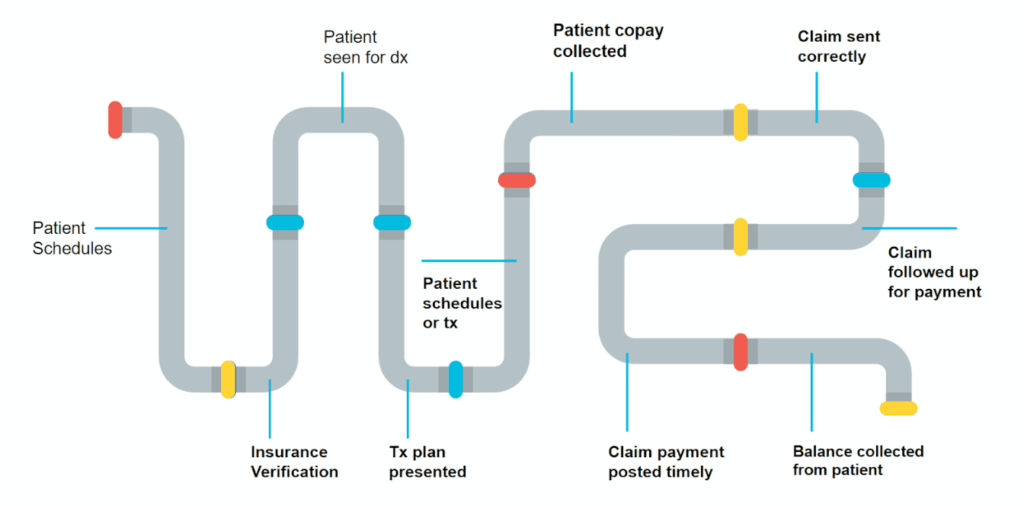
Dental Claim Submission and the Revenue Cycle
Let’s zoom in on the dental claim submission for reimbursement. In 2000, the United States government declared the Current Dental Terminology (CDT) code set as the national terminology for reporting dental procedures to insurance and third-party payors. This means that for a dental claim to be processed timely by an insurance payor, the claim must have valid and accurate CDT codes from the most current CDT code set.
Insurance companies, however, are not the only entities that rely heavily on dental coding. When a patient visits a dental office for treatment, the dental team documents the services provided and assigns appropriate CDT codes to each procedure. These coded procedures are then used to communicate treatment rendered to the dental team, other providers, and even insurance companies, making accurate reporting vital.
Dental Coding & Billing Knowledge Is Closer Than You Think
As you can see, dental coding plays an indispensable role in insurance collections and the overall revenue cycle of a dental practice. This is why you need team members with dental billing & coding knowledge and up-to-date resources. Depending on your location, these unicorn team members may be hard to find. That’s why many practices choose to partner with eAssist, the nation’s leading dental billing company, to ensure coding accuracy, reduce denials, and protect cash flow. Schedule a consultation to see how expert billing support can strengthen your revenue cycle.
Disclaimer: Insurance administration and dental billing recommendations presented here represent the opinions of the author or our staff and are for informational purposes only. You are responsible for your own use of the CDT Codes, insurance administration, and dental billing. For the latest CDT codes and official interpretations, contact the American Dental Association or visit ADA.org.
Spotlight

The 7 Deadly Sins of Dental Claims Denials
Learn how to avoid the most common claim mistakes and get paid faster.
Download eBook

Dental Insurance Billing Done for You
Discover how eAssist helps practices simplify billing and boost collections.
See How It Works

Talk to a Dental Billing Specialist
Not sure where to start with medical billing? Let’s talk.
Book a Consultation