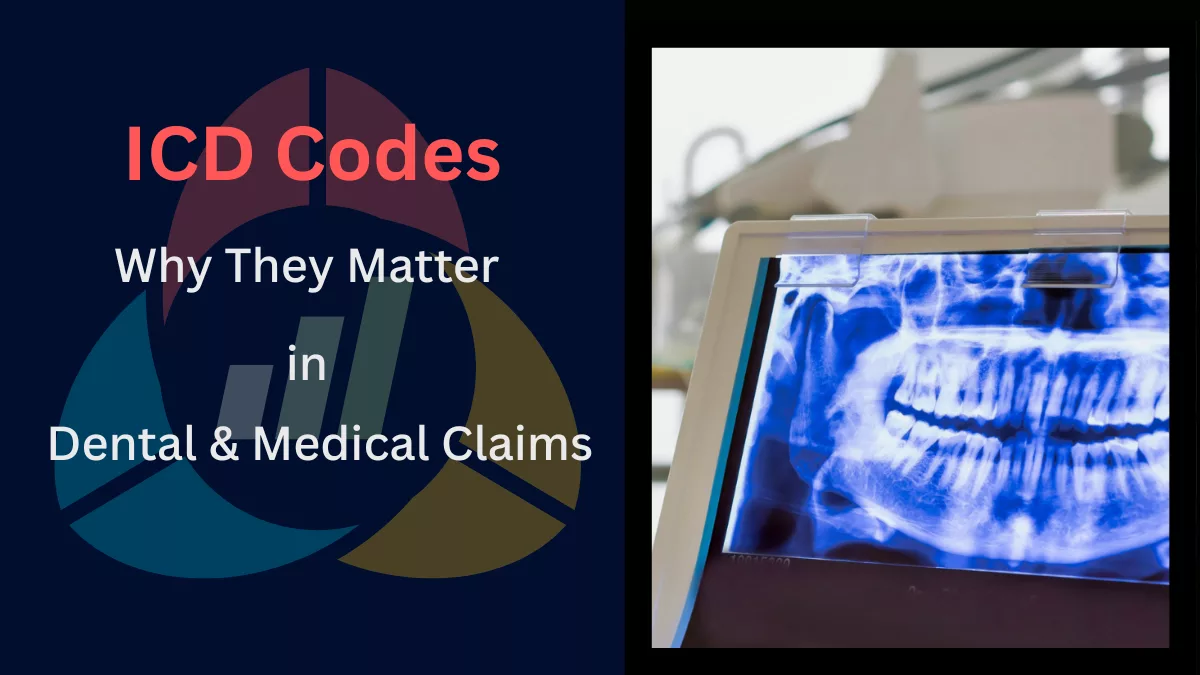

Why ICD Codes Matter for Dental and Medical Claims
Behind every claim submitted, whether dental or medical, there’s a patient hoping their treatment will be covered. And at the center of that approval process lies a simple but powerful tool:
International Classification of Diseases (ICD) Codes
They’re the universal language of diagnosis, yet the expectations around them shift depending on whether you’re submitting to dental insurance or medical insurance. Understanding those similarities and differences is what determines whether a claim is seamless or whether it stalls, gets questioned, or gets denied outright.
Let’s break down how ICD codes function in both worlds – and why getting them right matters so deeply for your patients.
Where Dental and Medical Claims Align: ICD Codes Explain the “Why”
Whether you’re billing a crown or an oral sleep apnea device, both dental and medical insurers rely on ICD codes for one essential purpose:
ICD codes explain why treatment was necessary.
Across both claim types, ICD codes:
- Identify the patient’s condition
- Support medical necessity
- Justify the procedure that follows
- Help insurers clearly understand the story behind the treatment
This shared expectation is what makes ICD codes so critical. They connect the diagnosis to the treatment in a way no CDT or CPT code alone can.
Where the Similarities End: Medical Claims Require ICD Codes, Dental Claims Usually Don’t
Here’s where many providers get tripped up.
Medical insurance requires ICD codes on every claim.
Dental insurance typically does NOT require ICD codes.
While the dental claim form includes a space for diagnosis codes, most dental plans only require them for certain procedures (e.g., anesthesia), and some don’t require them at all.
This difference often leads dental teams to underuse ICD coding – even when it could support the patient or strengthen a borderline claim.
Medical carriers see ICD codes as essential.
Dental carriers see them as supplemental, but increasingly valuable in getting claims approved.
The Shared Goal: Getting Patients the Coverage They Deserve
Even though dental and medical insurers approach ICD codes differently, the end goal is always the same:
Accurate diagnosis codes ensure fair, appropriate coverage.
Whether it’s a tooth extraction due to infection or an oral appliance for sleep apnea, ICD coding:
- Protects your patient
- Strengthens your claim
- Reduces denials
- Speeds up reimbursement
When dentists apply ICD codes with the same precision as medical providers, they elevate the quality of both their documentation and their patient advocacy.
ICD Codes: The Bridge Between Dental Care and Medical Necessity
They may be used differently, required differently, and evaluated differently across dental and medical claims, but they serve the same purpose:
ICD codes tell the truth behind the treatment.
When the diagnosis story is clear, insurance companies have fewer opportunities to say “no,” giving your patients the access and support they deserve.
Getting ICD coding right, across both dental and medical claims, can make the difference between delayed care and timely coverage for your patients. eAssist helps practices apply ICD codes accurately and consistently, strengthening documentation, supporting medical necessity, and improving claim outcomes. If your team is navigating crossover claims, oral appliances, or medically related dental procedures, schedule a consultation to see how eAssist can help bridge the gap between dental care and medical coverage so fewer patients hear “denied” and more receive the care they need.
Disclaimer: Insurance administration and dental billing recommendations presented here represent the opinions of the author or our staff and are for informational purposes only. You are responsible for your own use of the CDT Codes, insurance administration, and dental billing. For the latest CDT codes and official interpretations, contact the American Dental Association or visit ADA.org.
Spotlight
The 7 Deadly Sins of Dental Claims Denials
Learn how to avoid the most common claim mistakes and get paid faster.
Download eBook

Dental Insurance Billing Done for You
Discover how eAssist helps practices simplify billing and boost collections.
See How It Works

Talk to a Dental Billing Specialist
Not sure where to start with medical billing? Let’s talk.
Book a Consultation