
Medical Necessity in Dental Billing: What Insurers Require and Why Claims Get Denied
Updated 12/18/25
There is a moment in every dental practice where quality clinical care collides head-on with insurance reality.
A patient walks in with pain…
You diagnose responsibly…
You treat appropriately…
And then…your claim comes back denied.
Not because the care wasn’t needed.
Not because you didn’t perform it correctly.
But because the insurer determined the magic phrase we all wrestle with:
“Medical necessity was not established.”
If you’ve ever felt the sting of that denial, especially when you know the patient needed the treatment, you’re not alone. Medical necessity isn’t just confusing; it’s often elusive, shifting, and frustratingly inconsistent across payors.
But here’s the truth:
The future of dental reimbursement will be won by the practices that understand, document, and defend medical necessity, not just those that perform quality dentistry.
Let’s break down what today’s evolving insurance landscape really requires of you and how even small documentation improvements can transform your approval rate.
Why Medical Necessity Is Driving Dental Claim Denials
While dentistry and medicine speak similar languages, they don’t define “medical necessity” the same way. That matters because your claims depend on these standards.
The ADA defines medically necessary care as:
“The reasonable and appropriate diagnosis, treatment, and follow-up care (including supplies, appliances, and devices) as determined and prescribed by qualified, appropriate health care providers in treating any condition, illness, disease, injury, or birth developmental malformations. Care is medically necessary for the purpose of: controlling or eliminating infection, pain, and disease; and restoring facial configuration or function necessary for speech, swallowing or chewing.”
The AMA defines medically necessary care as:
“Health care services or products that a prudent physician would provide to a patient for the purpose of preventing, diagnosing or treating an illness, injury, disease or its symptoms in a manner that is: (a) in accordance with generally accepted standards of medical practice; (b) clinically appropriate in terms of type, frequency, extent, site, and duration; and (c) not primarily for the economic benefit of the health plans and purchasers or for the convenience of the patient, treating physician, or other health care provider.”
Translation:
Medical necessity isn’t about whether the procedure helps; it’s about whether your notes prove why the treatment was essential, how it affects the patient’s health or function, and whether the diagnosis supports the story.
When the Same Dental Procedure Is and Is Not Medically Necessary
Here’s where practices often get caught off guard:
The exact same treatment can be medical or not, depending entirely on what caused the condition.
Example:
A tooth fracture caused by a piece of hard candy?
- Dental. Not covered by medical payors.
A tooth fracture caused by accidental trauma?
- Medical. Often covered.
The treatment is identical.
The reimbursement outcome is not.
Payors look straight to your ICD-10-CM codes:
- K03.81 — Cracked tooth
Excludes 1: broken or fractured tooth due to trauma (S02.5) - S02.5XXA — Fracture of tooth (traumatic), initial encounter for closed fracture
Excludes 1: cracked tooth (non-traumatic) (K03.81)
One wrong code, or a note that doesn’t match the code, and your claim collapses.
Why Coding Based on Hearsay Creates Compliance Risk
“Someone told me this is how to get paid” is the fastest route to trouble
Coding based on hearsay is never just risky; it’s considered fraudulent.
Payors will absolutely reimburse legitimate, medically necessary treatment.
The key is proving:
- What happened
- Why it happened
- How the treatment relates directly to the patient’s health
And that story has to live in your documentation, and not in assumptions or shortcuts.
Why Every Dental Procedure Requires Medical Necessity Documentation
Radiographs.
Prophylaxis.
Oral surgery.
Restorations.
Periodontal therapy.
Everything is reviewed through the medical-necessity lens. The “habit-based” era of insurance is over.
Today, insurers want to know:
- Was there a clinical rationale for every procedure?
- Did the provider document it?
- Does the coding support what was written?
If it’s not documented, it didn’t happen.
If it’s not clinically justified, it won’t be paid.
SOAP Notes and Medical Necessity Documentation
Soap notes: the difference between approval and denial
SOAP Notes are now essential, not optional.
S — Subjective
Patient symptoms in their own words.
“How the patient felt.”
O — Objective
Clinical findings, radiographs, and measurements.
“What you observed.”
A — Assessment
Diagnosis supported by evidence.
“What you concluded.”
P — Plan
Treatment performed and rationale.
“What you did and why.”
Even routine prophy appointments require:
- Risk assessments
- Documentation of local irritants
- Clinical justification for frequency
And when treating multiple teeth? You must document each tooth individually.
Three Documentation Steps to Protect Reimbursement
- Know each patient’s benefits
Coverage, limitations, and exclusions – these vary dramatically between plans. Verification is protection. - Document everything clearly and clinically
Insurance processors aren’t in your operatory. They only know what you write. - Code accurately and honestly
Choose the CDT, CPT®, and ICD-10-CM codes that reflect the real clinical picture. Nothing more, nothing less.
Medical Necessity as a Compliance Advantage
Your patients trust you with their health.
Insurance payors trust you with your documentation.
When both align, you get paid.
Your patients get care.
Your practice thrives.
But as the rules evolve, staying compliant isn’t just smart—it’s essential. Practices that adapt now will be the ones that avoid denials, reduce patient frustration, and strengthen their financial stability.
Medical necessity isn’t just a billing requirement. It’s the bridge between your clinical excellence and your practice’s financial success.
Documentation Support for Dental Medical Billing Teams
When the rules keep changing, your team shouldn’t have to navigate them alone. That’s why eAssist and Practice Booster continue to provide the nation’s most trusted resources for dental coding, billing, and administrative excellence.
Equip your practice with the industry’s gold-standard guide
Ready to strengthen your documentation, reduce denials, and safeguard your revenue?
Dental Administration With Confidence
The essential Practice Booster reference book every dental team should have within arm’s reach.
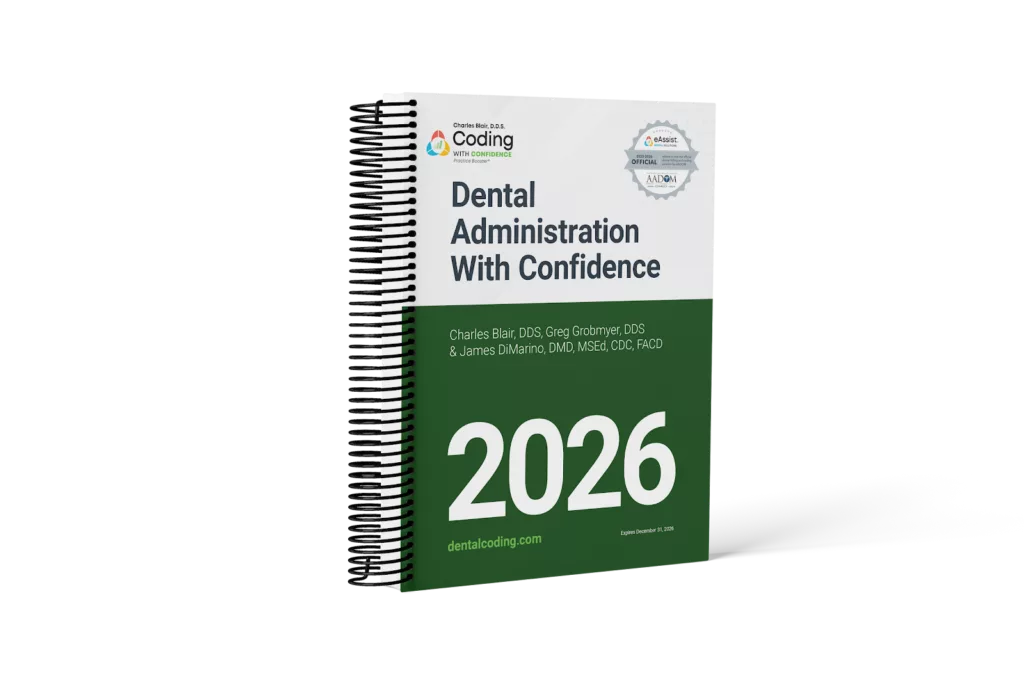
Inside, you’ll find:
- Common coding errors and documentation requirements the dental benefits consultants reviewing your claims want you to know
- Proven strategies for supporting medical necessity
- Step-by-step administrative workflows
- Guidance from Practice Booster’s coding and insurance administration Advisors who understand both the clinical and financial realities of today’s dental practices
Whether you’re tightening compliance, onboarding new team members, or elevating the precision of your billing systems, this resource helps your practice operate with clarity, confidence, and consistency.
Drowning in claims and denials? eAssist takes the burden off your team.
Our dental billers manage your insurance, recover revenue, and keep cash flow steady, so you can focus on dentistry while we conquer the chaos behind the scenes. Schedule a consultation to learn more about how eAssist can help you document for medical necessity so your claims get paid.
Disclaimer: Insurance administration and dental billing recommendations presented here represent the opinions of the author or our staff and are for informational purposes only. You are responsible for your own use of the CDT Codes, insurance administration, and dental billing. For the latest CDT codes and official interpretations, contact the American Dental Association or visit ADA.org.
Spotlight
The 7 Deadly Sins of Dental Claims Denials
Learn how to avoid the most common claim mistakes and get paid faster.
Download eBook

Dental Insurance Billing Done for You
Discover how eAssist helps practices simplify billing and boost collections.
See How It Works

Talk to a Dental Billing Specialist
Not sure where to start with medical billing? Let’s talk.
Book a Consultation