

Co-Founder and CXO, eAssist
Sandy Odle is the Co-Founder and CXO of eAssist Dental Solutions, where she has played a key role in shaping the company’s business and marketing strategies, leading to record growth and national recognition on the Inc. 500 and Utah Top 100 lists. A passionate social entrepreneur, Sandy believes that business is about building meaningful connections and creating personalized solutions that truly meet customer needs. Her relentless commitment to delivering exceptional client experiences is at the heart of eAssist’s mission. Drawing on the discipline and attention to detail honed during her early career as a ballet dancer, Sandy brings a unique blend of creativity, precision, and work ethic to everything she does.
D2950 Core Build-Up: When It Applies and How to Bill It Correctly
Updated 12/2025
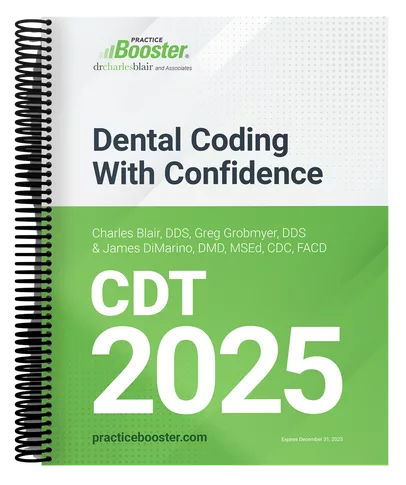
The dental code, D2950 (core build-up), is overused and misused in many situations. We have referenced its application from the industry-leading resource, Practice Booster’s Dental Coding with Confidence, and online Code Advisor, to clarify its true application.
When Does D2950 Apply?
According to the manual, “Dental Coding with Confidence, “A core build-up must be necessary for crown retention to be considered a build-up. The core build-up should rebuild the internal anatomy of the tooth structure as prepared for a crown.” This is often clinically defined by payors as 50% or more of the supragingival tooth structure missing after removal of decay and old restorations and preparation of the tooth.
Core Build-Up Billing Tips
Date of Service and Payor Sequencing Requirements
Some payors require a certain “date sequence” to justify a core buildup (D2950). Report the core buildup on the date performed. Note that some payors will not reimburse the core buildup unless a predetermination has been submitted for the planned crown or until the crown has been seated (on a subsequent date).
Per the ADA, procedures may be reported either at the start date or at the completion date. The 2024 ADA Dental Claim Form states, “I hereby certify that the procedures as indicated by date are in progress (for procedures that require multiple visits) or have been completed.” Third-party contract provisions may dictate that the doctor report the crown on either the start or completion date. Generally, the reporting date (incurred liability date) is the completion date. Refer to the contract language for proper coding/billing.
Some practices file a “paper” claim form on the preparation date with the “predetermination” and “statement of actual services” block checked (at the top of the claim form). In the Record of Services Provided section, report the core buildup with your full practice fee (less any discounts provided) and date of service. Next, enter the proposed crown to be placed and your full practice fee (less any discounts provided), but leave the date blank. Many payors will consider the core buildup claim as they have alerted that the crown is planned and will follow the core buildup on a subsequent date.
Documentation That Supports D2950 Claims
Include intraoral photos of the tooth before preparation (to justify the crown) and after decay removal and preparation (to show the extent of tooth loss and justify the buildup).
Additional tips for claim submission and proper documentation for core buildups can be found in Practice Booster’s Dental Coding With Confidence or their online Code Advisor!
Struggling with denied or delayed D2950 claims?
If you are struggling with billing core build-ups, consider partnering with eAssist. Our Success Consultants have full access to the entire Practice Booster library to support you in submitting clean claims for buildups. To find out more, schedule a free consultationhere.
Included with All eAssist Services
Online Code Advisor — Now Included
Get full access to Practice Booster’s® Online Code Advisor by Dr. Charles Blair — the essential tool for accurate dental coding, denial prevention, and compliance, included free with every eAssist service.Learn proven strategies to reduce denials, accelerate payments, and increase profitability.
Disclaimer: Insurance administration and dental billing recommendations presented here represent the opinions of the author or our staff and are for informational purposes only. You are responsible for your own use of the CDT Codes, insurance administration, and dental billing. For the latest CDT codes and official interpretations, contact the American Dental Association or visit ADA.org.
Spotlight

The 7 Deadly Sins of Dental Claims Denials
Learn how to avoid the most common claim mistakes and get paid faster.
Download eBook

Dental Insurance Billing Done for You
Discover how eAssist helps practices simplify billing and boost collections.
See How It Works

Talk to a Dental Billing Specialist
Not sure where to start with medical billing? Let’s talk.
Book a Consultation